
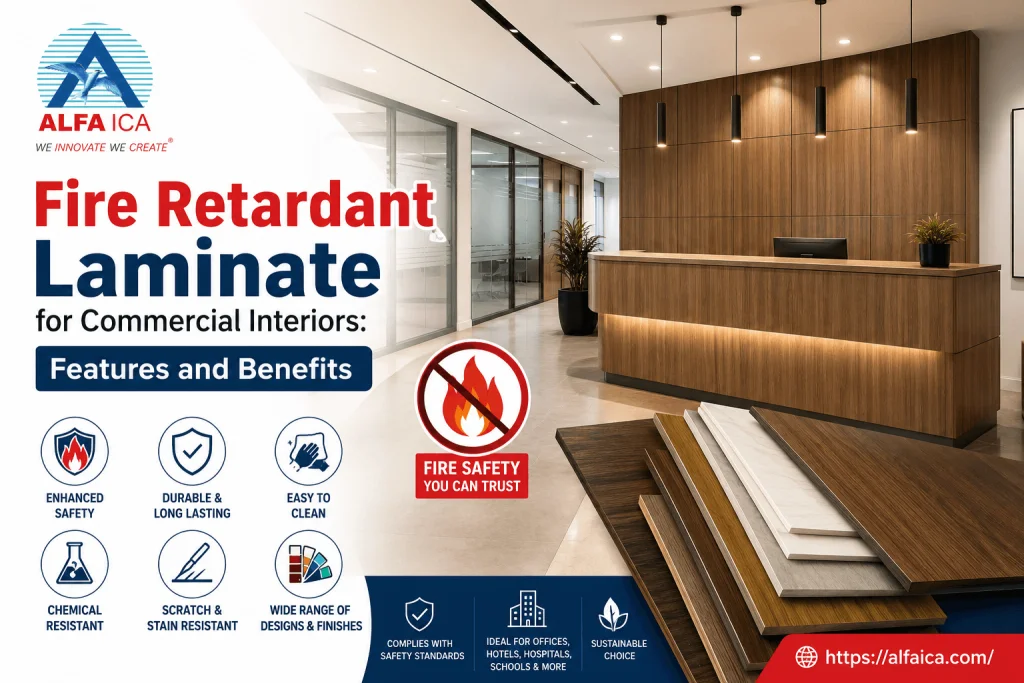

Commercial interiors require materials that combine durability, safety, and visual appeal. Offices, educational institutions, healthcare facilities, retail outlets, and hospitality spaces experience heavy daily use, making material selection an important part of interior planning. Among the preferred decorative surface solutions available today, fire retardant laminate has gained significant attention because it helps improve safety while maintaining attractive aesthetics. Designed to perform under demanding conditions, these decorative panels offer reliable performance, long service life, and design flexibility, making them suitable for a wide range of commercial applications.
Key Features and Benefits of Modern Decorative Surface Panels
Commercial environments demand products that can withstand continuous use while maintaining their appearance over time. Decorative surface panels designed for professional spaces provide a combination of functionality and style, helping architects and designers create interiors that remain practical for years.
One of the major advantages is improved safety performance. These engineered panels are manufactured using specialized technology that slows the spread of flames and minimizes smoke generation compared to conventional decorative boards. Although they do not make a structure completely immune to heat, they provide valuable additional time during emergency situations and support compliance with building safety requirements.
Another notable advantage is durability. Commercial facilities experience constant foot traffic, furniture movement, and frequent cleaning. High-quality decorative surfaces are designed to withstand scratches, stains, moisture, and everyday wear, helping preserve their appearance with minimal maintenance.
Modern manufacturing techniques also allow these panels to be produced in an extensive variety of finishes, textures, and colors. Whether the project requires woodgrain patterns, stone-inspired designs, solid shades, or contemporary matte finishes, designers have numerous options to complement different architectural styles.
An equally important characteristic is the availability of chemical resistant laminate options for locations where regular cleaning and sanitization are essential. Hospitals, laboratories, pharmaceutical facilities, educational institutions, and food preparation areas often require surfaces that can tolerate exposure to cleaning solutions without losing their decorative finish or structural quality.
Additional benefits include:
- Enhanced safety for commercial environments
- Excellent durability under frequent usage
- Attractive finishes suitable for various design themes
- Easy cleaning and low maintenance requirements
- Good resistance to scratches, stains, and moisture
- Suitable for wall cladding, furniture, partitions, doors, and workstations
- Long-lasting appearance with consistent performance
Available in multiple textures and decorative patterns
These features make engineered decorative panels suitable for projects where functionality and appearance are equally important.
Another valuable feature is dimensional stability. Commercial interiors frequently experience changes in temperature and humidity due to air conditioning systems and varying occupancy levels. Quality decorative boards remain stable under such conditions, helping reduce issues such as warping or surface deformation over time.
Many architects also appreciate the flexibility these products provide during interior planning. They can be incorporated into reception counters, office cabins, conference rooms, hotel furniture, shopping malls, educational facilities, and healthcare environments without compromising overall design consistency.
The availability of fire resistant laminate solutions further expands application possibilities. Such products are commonly selected for commercial projects where compliance with applicable building standards is an important consideration while maintaining attractive interior finishes.
Maintenance requirements are another reason these decorative materials remain popular. Daily cleaning generally involves a soft cloth and mild cleaning solution, making routine upkeep simple for facility management teams. This ease of maintenance contributes to reduced operational costs throughout the life of the installation.
Sustainability has also become an important factor in modern construction. Many manufacturers now adopt environmentally conscious production practices and source raw materials responsibly. Low-emission products can contribute to healthier indoor environments while supporting green building initiatives.
Cost efficiency should also be considered when evaluating decorative materials. Although premium products may involve a higher initial investment than standard alternatives, their durability, reduced maintenance needs, and extended service life often provide better long-term value. Fewer replacements and lower maintenance expenses can help reduce lifecycle costs for commercial property owners.
Choosing suitable decorative panels involves evaluating several practical factors. Designers and project managers should review applicable performance certifications, manufacturing quality, surface finish options, installation requirements, maintenance recommendations, and compatibility with the intended application. Products should always be selected according to relevant building regulations and project-specific requirements.
Proper installation also plays a significant role in long-term performance. Experienced installers ensure accurate fitting, secure bonding, and appropriate edge finishing, allowing the decorative surfaces to maintain their appearance and structural integrity throughout years of continuous use.
Commercial interiors continue evolving as organizations seek environments that are safe, attractive, and efficient. Decorative materials that combine durability, aesthetic flexibility, and dependable performance help support these evolving design expectations while meeting functional demands across multiple industries.
Conclusion
Selecting appropriate surface materials is an important investment in any commercial project. Products that balance safety, durability, easy maintenance, and attractive design can contribute to reliable long-term performance while supporting modern architectural concepts. When evaluating available options, considering certified products that match the intended application is essential. Investing in the Best fire retardant laminate can help create commercial interiors that combine visual appeal with dependable performance and long-lasting value.
What is fire retardant laminate?
Fire retardant laminate is a decorative surfacing material designed to slow the spread of flames and reduce smoke generation compared to standard laminates. It is widely used in commercial interiors where enhanced safety is a priority.
Where is fire retardant laminate commonly used?
It is commonly installed in offices, hospitals, schools, hotels, shopping malls, airports, restaurants, and other commercial buildings for applications such as wall cladding, partitions, furniture, doors, and workstations.
Is fire retardant laminate suitable for high-traffic areas?
Yes. It is designed to withstand frequent use, making it suitable for busy commercial environments. It also offers good durability against scratches, stains, and everyday wear when properly maintained.
4. What is the difference between fire retardant laminate and fire resistant laminate?
It is commonly installed in offices, hospitals, schools, hotels, shopping malls, airports, restaurants, and other commercial buildings for applications such as wall cladding, partitions, furniture, doors, and workstations.
No comment